Sixties Music Films S.F.History Guides Photography Novels Cookbooks S.F.Films
ANTI WAR ART BIOGRAPHIES COMMUNES CULTURE/FASHION DRUGS/SEX
HAIGHT ASHBURY/SAN FRANCISCO MUSIC NOVELS POETRY
CULTURAL REVOLUTION
The Personalities and Events in Politics, Civil Rights, Free Speech, Women's Movement, Vietnam War, New Left, SDS and Weathermen, Hippies and Yippies.
Aquarius Revisited:Seven Who Created the Sixties Counterculture That Changed America by Bruce Van Wyngarden
Meet seven of the elemental forces who shaped the counter-culture of the Sixties as the outrageous, fascinating, and above all intelligent souls that laid the groundwork for the last great movement our century will see.
Berkeley at War: The 1960s
W. J. Rorabaugh
A vividly narrated history examines the Free Speech Movement, black militants, the emerging anti-war movement, and more.
"The ‘futures’ and ‘careers’ for which American students now prepare are for the most part intellectual and moral wastelands. This chrome-plated consumers’ paradise would have us grow up to be well-behaved children. But an important minority of men and women coming to the front today have shown that they will die rather than be standardized, replaceable, and irrelevant." ~Mario Savio, (Berkeley Free Speech Activist), "An End to History," Humanity, Dec. 1964.
From Camelot to Kent State
by Joan Morrison, Robert K. Morrison
A look back at the major events of the 1960s, told by the voices of both the famous and those they affected, which, as a result, creates a powerful focus on the human dimension of that turbulent decade.
Common Ground : A Turbulent Decade in the Lives of Three American Families
by J. Anthony Lukas
This is a story of the busing crisis in Boston. The most acclaimed nonfiction book of 1985, a national bestseller, now makes its appearance in paperback, from the author of Don't Shoot--We Are Your Children! Winner of 3 different awards.Web Links
The Sixties and Seventies from Berkeley to Woodstock - World History
The Kennedys - PBS)
The Sixties Project
Chicago Convention-by Terry Southern Nov.1968
"The Chicago Seven" Trial
Articles from The Black Panther, 1967 - 1970
The Civil Rights Era
Civil Rights Movement Veterans
Civil Rights Events Timeline
Women's Liberation Movement
Archival Collection Duke University
The Story of Cesar Chavez
Environmentalism 1960-1986
The Indian Occupation of Alcatraz Island: 1969-1971
Latin America into the 1960sThe Political Cartoons From the Crash to the millennium of Herbert Block
The Dream and the Nightmare: The Sixties' Legacy to the Underclass
by: Magnet, Myron
"[Governor George W. Bush's ideas] have been shaped by a 1993 book that blames the social and political permissiveness of the 1960s for many problems since then. That book, The Dream and the Nightmare, argues that overzealous efforts by the Haves to help the Have-Not's actually made their situation worse, not better." ~ Dave McNeely, Austin American-Statesman
![]()
Hippies From A to Z: Their Sex, Drugs, Music and Impact From the Sixties to the Present
by Skip Stone, Paul Williams
Truly impressive overview of the personalities and events of the Hippy Movement, how they influenced the course of history and transformed American society!
Read it for Free
Imagine Nation: The American Counterculture of the 1960's and 70's
Peter Braunstein (Editor) Michael William Doyle(Editor)
Amidst the recent flourishing of Sixties scholarship, Imagine Nation is the first collection of essays to focus solely on the counterculture. Its fourteen provocative essays seek to unearth the complexity and rediscover the society-changing power of significant movements and figures. The fascinating constellation of topics covered include feminism, psychedelic drug experimentation, guerilla theatre, the New Left, Jimi Hendrix, communal living, underground comics, and avant-garde film.
The Long March : How the Cultural Revolution of the 1960s Changed America by Roger Kimball
In The Long March, Roger Kimball, the author of Tenured Radicals, shows
how the "cultural revolution" of the 1960s and '70s took hold in America,lodging in our hearts and minds, and affecting our innermost assumptions about what counts as the good life. Kimball believes that the counterculture transformed high culture as well as our everyday life in terms of attitudes toward self and country, sex and drugs, and manners and morality. Believing that this dramatic change "cannot be understood apart from the seductive personalities who articulated its goals," he intersperses his argument with incisive portraits of the life and thought of Allen Ginsberg, Norman Mailer,Timothy Leary, Susan Sontag, Eldridge Cleaver and other "cultural revolutionaries" who made their mark.
The Evergreen Review Reader: 1967 -1973
by Barney Rosset (Editor)
From its first issue in 1957 to its final in 1973, Evergreen Review was hailed as one of the most provocative magazines ever. The bible for a generation of radicals and freethinkers, Evergreen championed Beckett and Brautigan, erotica and liberal activism with an in-your-face attitude that confronted and challenged the conventions of the day. Edited by Barney Rosset, this selection, which has never been anthologized before, represents the best of the magazine's final years - 1967 through 1973 - a politically and socially tumultuous half decade that included such pivotal events as the assassinations of Robert Kennedy, Malcolm X, and Che Guevara, the Democratic Convention in Chicago, and the massacre at Mylai
The Hippies and American Values by Timothy Miller
The hippies of the late 1960s were cultural dissenters who, among other things, advocated drastic rethinking of certain traditional American values and standards. In this survey, Miller (religious studies, U. of Kansas) traces the movement's ethical innovations and analyzes the impact of its ideas on subsequent American culture.
The Last Innocent Year: America in 1964: The Beginning of the "Sixties" by: Jon Margolis
John Kennedy was dead, The Warren Commission was busily sifting evidence, Jackie Kennedy was fast on her way to becoming an icon of dignified widowhood, and Lyndon Johnson was tearing down Camelot to build the Great Society. Young men started burning draft cards, rioting blacks burned whole neighborhoods, women began to wonder if the male sex was their oppressor, Congress passed the Tonkin Gulf Resolution (which escalated the war in Vietnam), and three civil rights workers were killed in Mississippi. Jon Margolis, a former political reporter for the Chicago Tribune, captures all the drama and emotion of this historic year, recreating it from the perspective of the statesmen, celebrities, and ordinary people who made its events come alive.
Long Time Gone: Sixties America Then and Now
by: Bloom, Alexander
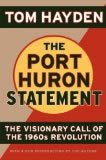
Long Time Gone dispels myths about the Sixties and constructs an accurate vision of the past and an understanding of its impact on the modern world. It is an invaluable resource for anyone seeking deeper knowledge of this incredible decade and its continuing influence on American culture.Tom Hayden, "Port Huron Statement", 1962.
This SDS pamphlet helped shape the thought of the New Left for the next several years.
"The decline of utopia and hope is one of the defining features of social life today….the horrors of the 20th century, symbolized in the gas ovens and concentration camps and atom bombs, have blasted hopefulness.…To be idealistic is to be considered deluded…"Some would have us believe that Americans feel contentment amidst prosperity — but might it not better be called a glaze above deeply-felt anxieties about their role in the new world? "…We seek the establishment of a democracy of individual participation,…a participatory democracy….The political order should provide outlets for the expression of personal grievance and aspiration…"To turn these possibilities into realities will involve national efforts at university reform by an alliance of students and faculty. They must wrest control of the educational process from the administrative bureaucracy. They must make…contact with allies in labor, civil rights, and other liberal forces outside the campus. They must import major public issues into the curriculum….They must make debate and controversy…the common style for educational life."...Tom Hayden
The Movement and the Sixties
by Terry H. Anderson
Why did millions of Americans become activists in the 1960s; why did they take to the streets? These are questions Terry Anderson explores in this searching history of the social activism that defined a generation of young Americans and that called into question the very nature of "America."
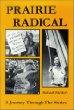
Prairie Radical A Journey Through the Sixties
by Robert Pardun
The sixties was a decade of change - social change, political change, and personal change. A generation of young people challenged the existing order around issues as important as legal segregation in the South and the mass murder that was taking place in Vietnam, and as petty as hair length and dress codes. Those in authority - parents, school administrators, police, the FBI, legislators, and presidents - resisted that change. The result was a conflict that divided the nation in much the same way the Civil War had done a century before. The sixties changed America - and it changed those of us who lived through it. I was part of that generation.
I hope that this "history with a human face " helps people experience the passion of that decade rather than just learning what happened. ~ Robert Pardun.author
Rites of Passage: A Memoir of the Sixties
Anti-war marches, human be-ins, rock festivals, psychedelic drugs, underground newspapers, free universities, light shows, inner-city riots, radical skirmishes, and hippie antics are chronicled by a member and in-house critic of the New Left and counter culture. "Crowley provides a vivid portrait of one community during the social upheavals of the sixties. It is stimulating, informative, and entertaining". ~ Western Historical Quarterly
The Sixties Papers
by Judith C. Albert (Editor), Stewart E. Albert (Editor)
Featuring documents of the period by participants such as Norman Mailer, Allen Ginsberg, H. Rap Brown, Abbie Hoffman, and Robin Morgan, this volume brings together a wide range of material on one of the most turbulent decades in American history. The contributors are divided into five sections, covering ideas influential on the early New Left, the anti-war movement, SDS and Weathermen, the counterculture and Yippies, and the women's movement. The book surveys all the major issues that concerned the "sixties generation," and offers a unique documentary history of the period.
The Sixties :Years of Hope Days of Rage
by Todd Gitlin
Say "the Sixties" and the images start coming, images of a time when all authority was defied and millions of young Americans thought they could change the world either through music, drugs, and universal love or by "putting their bodies on the line" against injustice and war.
Todd Gitlin, the highly regarded writer, media critic, and professor of sociology at the University of California, Berkeley, has written an authoritative and compelling account of this supercharged decade--a decade he helped shape as an early president of Students for a Democratic Society (SDS) and an organizer of the first national demonstration against the Vietnam war.
Takin' It to the Streets:
A Sixties Reader
by Alexander Bloom(Editor), Wini Breines (Editor)
Drawn from mainstream sources, little known sixties periodicals, public speeches and pamphlets, this anthology brings together writings that have been unavailable for years or have never been reprinted. Paying particular attention to civil rights, Black power, the counter-culture, student and anti-war activity, and the gay/lesbian and women's struggle for recognition, it also takes into account the conservative backlashes and presents a balanced portrait of a tumultous era.
Voices in the Purple Haze: Underground Radio and the Sixties
Michael C. Keith ,Foreword by Dusty Street
From 1966 to 1972, underground radio shattered the conventions of commercial radio. Over 30 pioneers of the underground airwaves share insights and anecdotes, and tell it like it was.
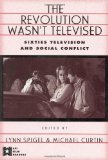
The Revolution Wasn't Televised: Sixties Television and Social Conflict
by Spigel, Lynn
Editor Curtin, Michael
This book explores the ways in which prime-time television was involved in the social conflicts of the 1960s. Television became a ubiquitous element in American homes. The contributors in this volume argue that due to TV's constant presence in everyday life, it became the object of intense debates over childraising, education, racism, gender, technology, politics, violence, and Vietnam. These essays explore the minutia of TV in relation to the macro-structure of sixties politics and society, attempting to understand the struggles that took place over representation the nation's most popular communications media during the 1960s.
The Feminine Mystique
by Betty Friedan, Anna Quindlen (Introduction)
The classic book which triggered the '60s women's liberation movement. The "mystique" Friedan refers to is the idea that women should find complete fulfillment in the home as wives and mothers.Walden and Civil Disobedience (1849) Civil Disobedience has more history than many suspect. In occupied Denmark in the 1940's it was read by the Danish resistance, in the 1950's it was cherished by people who opposed McCarthyism, in the 1960's it was influential in the struggle against apartheid in South Africa, and in the 1970's it was discovered by a new generation of anti-war activists.
The Making of a Counter Culture
by Theodore Roszak
The author traces the intellectual underpinnings of the 1960s student radicals and hippie dropouts in the writings of Herbert Marcuse and Norman O. Brown, Allen Ginsberg and Paul Goodman. In a new introduction, Roszak reflects on how the counter culture has evolved in the twenty-five years since he coined the term 'technocracy.
In Praise of Decadence
by Jeff Riggenbach
From a libertarian perspective, Riggenbach reevaluates the social and political significance of the 1960s, the revolutions that preceded it, and the explosion of original thought that it inspired. He argues that the seminal decade ushered in a period of spreading and deepening cultural decadence which still shows no sign of abating. Annotation c. by Book News, Inc.,
Reflections on a Disruptive Decade : Essays on the Sixties
by Eugene Davidson
Gathered together here for the first time, the essays in Reflections on a Disruptive Decade present an intellectual conservative's perspective on an era which, because it underscores so many of the political divisions still with us today, continues to hold our fascination.
Second Thoughts: Former Radicals Look Back at the Sixties
by Peter Collier
Why did so many founders and supporters of the sixties' New Left movement become disillusioned and drift to the political center and right?
What were their "second thoughts", and how did they extricate themselves from their radical ties? Read this book for the answers.
Magic of the Sixties
by Gene Anthony
Relive one of the most magical times in history, a time that saw profound cultural and spiritual change throughout the world, but nowhere more than in the San Francisco Bay of the mid to late 1960's. Author and photographer Gene Anthony was there...
Summer of Love :The Inside Story of Lsd, Rock & Roll,
Free Love and High Times in the Wild West.
Grateful Dead fans are sure to enjoy it.
Steal This Book. (1971)
"Revolution is not something fixed in ideology, nor is it something fashioned to a particular decade.
It is a perpetual process embedded in the human spirit." ~ Abbie Hoffman
Read It Online! (413k)
"It's embarrassing you try to overthrow the government and you wind up on the Best Seller's List." ~Abbie Hoffman
"I believe in compulsory cannibalism. If people were forced to eat what they killed there would be no more war."~ Abbie Hoffman
The Times Were a Changin'
by Irwin Unge
This is a book that is sure to tantalize and confound readers, while inspiring and enraging them as well. It provides us with a better understanding of the strategy and maneuvering of the 1960s war games - from the Bay of Pigs to the Tet Offensive.
It helps us to define the current of social intolerance that plagues our country to this day. With equal time to William F. Buckley and Abbie Hoffman, Barry Goldwater and Hubert Humphrey, the Black Panthers and Martin Luther King, Jr., it is an anthology that supplies rhyme and reason to a decade that never ceases to amaze us, endless in its capacity to be explored and understood.
The Theater Is in the Street: Politics and Performance in Sixties Americaby Bradford D. Martin
This book examines the SNCC Freedom Singers, The Living Theatre, the Diggers, the Art Workers Coalition and the Guerrilla Art Action Group. These 1960s arts and cultural groups staged performances in public spaces, as art, theater, and politics converged and assumed a new visibility in everyday life. The book explains why these groups embraced public performance as a vehicle to express and advance their politics.
With the Weathermen: The Personal Journey of a Revolutionary Woman
by Susan Stern, Laura Browder
Susan Stern was involved with the Weathermen from their beginnings in 1969 until 1972. This is the story of her experiences.
At the University of Kansas, in February 1972, a group of women who called themselves the February Sisters took over the East Asian Studies Building for about twelve hours. Their action, as I see it, was to bring to light grievances about health care and day care at the university. shortly after their action, the university moved forward on a women's health clinic at the student health center and a day care was founded. Additionally, the women's studies department at KU was created, and the February Sisters are still known as the "Mothers of women's studies." It was an important protest, but one that was largely ignored by most of the campus and the Lawrence community."We won very few people over to our politics. We were not yet capable of leading masses of kids. Our…intolerance [hurt us]….We were lazy….We had succeeded in hardening ourselves — we could be critical of each other, we could fight for our ideas, we could fight pigs. But in all this hardening, we lost some of our humanity….Very often we lost sight of the deep love that had made us revolutionaries in the first place." ~Two New York Weathermen, 1971.
When you purchase through any of the links to books, music or posters
on S.F. Heart, you are helping to support this website and your
support is very much appreciated. |
More
Hippie Pages
My Summer of Love The Protest Songs More on Peace and Love Map of the Sixties
“35th Anniversary Celebration of the Summer Of Love Allen Cohen Poetry
Music Raves of the Hippie Daze Music Posters Peace Quotes Posters / Fine Art
recommended reading for wannabe hippies Hippie Links
![]()
Sixties
Music Films S.F.History S.F.Guides S.F.Photography S.F.Novels S.F.Cookbooks S.F.Films
San Francisco Peace and Love Music Now Age Table of Contents HOME
Website created by S.F.Heart©1997 - 2006 all rights reserved.
All products and company names mentioned herein are the trademarks of their respective owners.